


Poultry farming that
builds local resource circulation
and a shared landscape

 Skip to content
Item added to your cart
Prices shown include tax. Shipping will be calculated at checkout.
View cart点々 Original
Wild venison caught in the village
Wild venison caught in the village
Taxes included.
Regular price
¥2,646
Regular price
Sale price
¥2,646
Unit price
per
Frozen delivery products / Shipped approximately within 1 week of purchase.
Couldn't load pickup availability
Shipping Information
Shipping Information
Products are shipped by room-temperature, refrigerated, or frozen delivery, depending on the product. Please check each product page for the applicable shipping method.
If you order both room-temperature and refrigerated products, they will be shipped together via refrigerated delivery whenever possible to reduce shipping costs and packaging.
Frozen products cannot be shipped together with room-temperature or refrigerated products.
We will make every effort to pack your order into a single box. However, if your order exceeds the capacity of our largest box, additional boxes may be required, resulting in extra shipping charges.
If additional shipping charges apply, we will recalculate the shipping fee after your order is placed and send you an email requesting payment for the additional shipping cost.


- Story
- Item Info
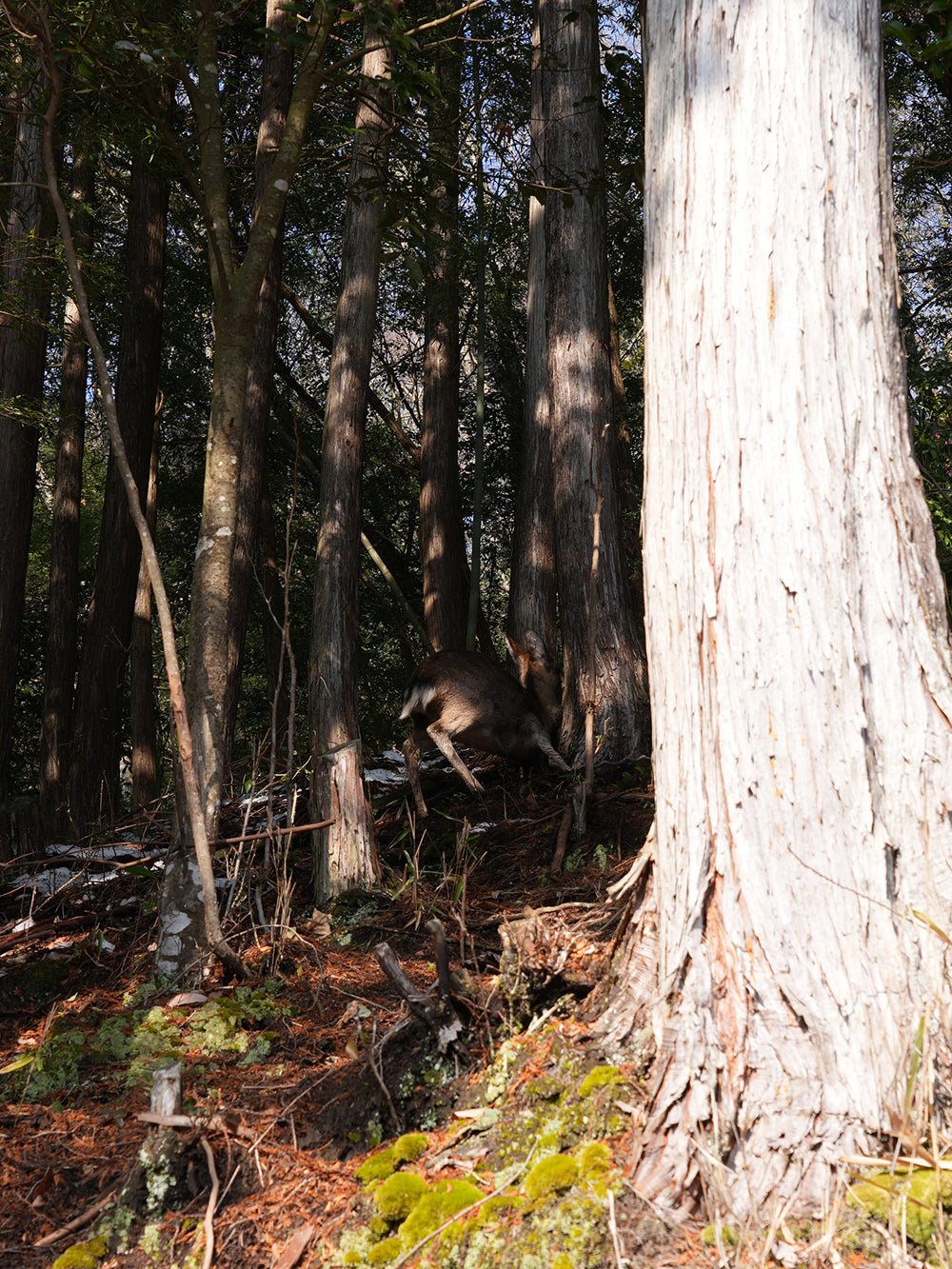
Damage to agricultural crops by deer is a problem in satoyama areas throughout Japan, and in this village where we live, many wild deer also inhabit. We want to turn the "problem" posed by the deer close to us into the "value" of the nature fostered by the satoyama. We will do this by obtaining hunting licenses ourselves, capturing wild deer, and carefully disassembling and butchering them at local processing facilities, delivering them as delicious ingredients to enrich our customers' dining tables.
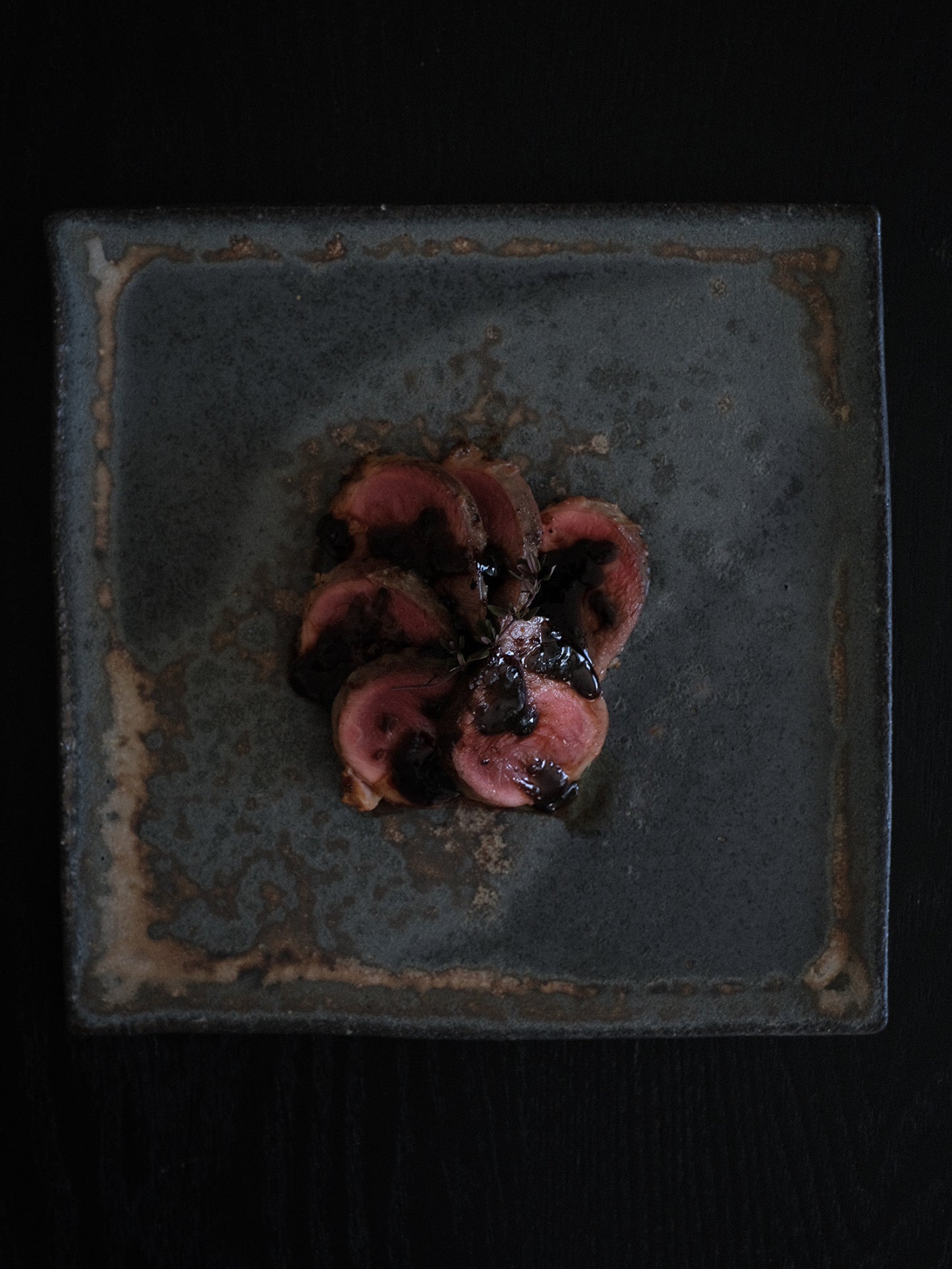
We introduce recipes using our products. Please see Stories Recipes.
Recipes are not included with the product. Please be aware of this in advance.
※This venison was hunted in February 2026.
[Back Loin]The back loin, the finest cut of venison, is characterized by its fine-grained fibers and appropriate fat content, making it very tender.
[Sirloin Tip]
Sirloin tip is part of the thigh, located on the front of the deer's hind leg.
It is particularly tender among thigh cuts, characterized by lean, healthy red meat with low fat content.
[Rump]
The rump is a part of the thigh located from the back to the hip.
It has a moderate elasticity and a rich umami, truly a "meat!" presence. We recommend it as a steak. Since the fibers are a bit coarse, pounding it lightly with a knife before grilling will result in a more tender finish.
Lean venison, when cooked slowly at a low temperature, becomes moist and tender.
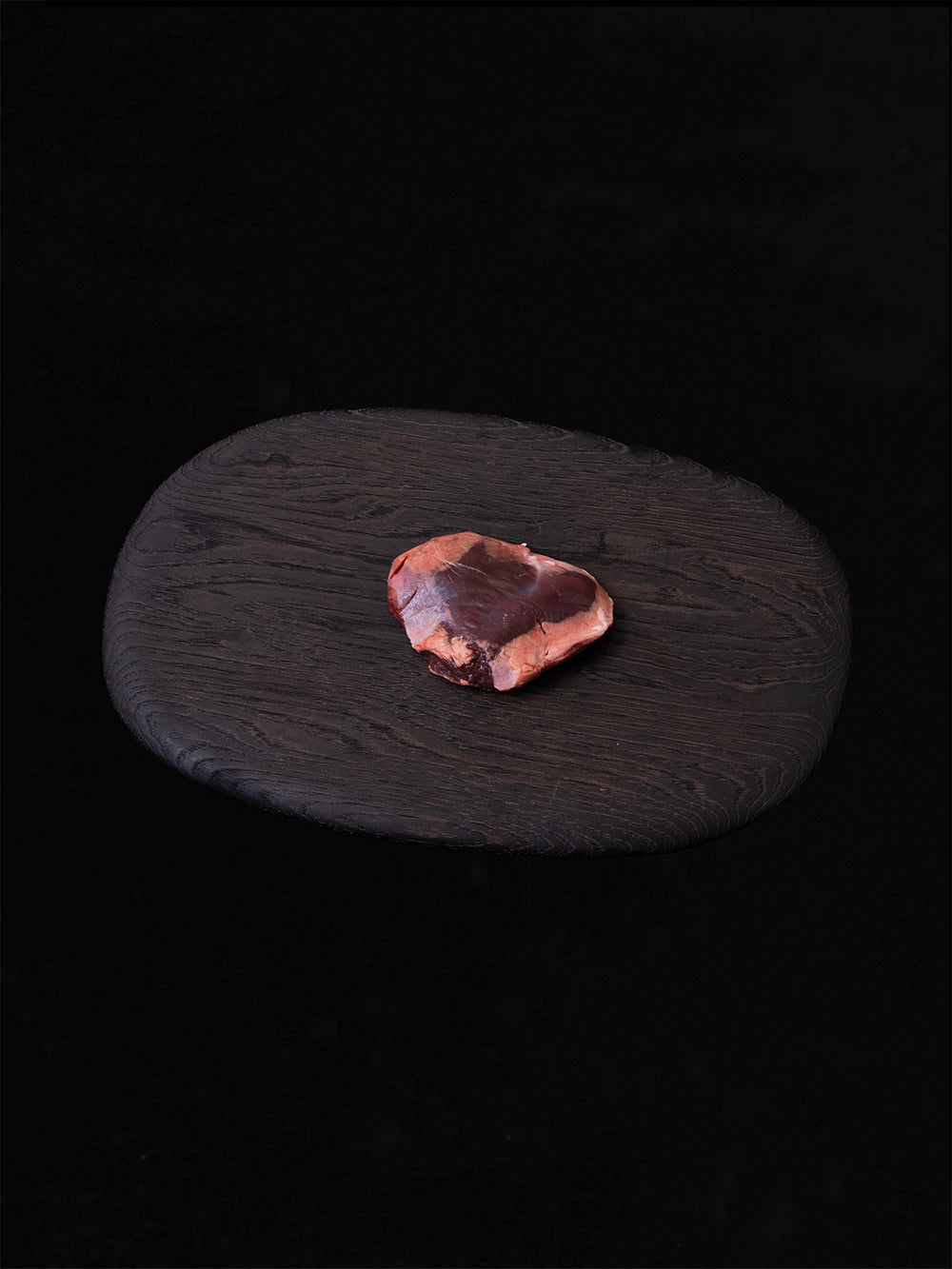
[Heart]
The heart is characterized by its plump, firm texture.
It has no strong odor and requires no special preparation, so you can cook it immediately.
It is also recommended for dishes like ajillo or karaage.
[Tongue]
Its appearance might surprise you at first, but deer tongue is a rare delicacy favored by connoisseurs, with a delicious crunchy texture.
Preparation is simple.
After lightly rinsing the thawed tongue, quickly blanch it in boiling water for about 2 minutes. Once the surface skin turns white, it can be peeled by hand. For parts where the skin is difficult to peel, pour hot water over it again, and it should peel off smoothly.
After grilling, simply sprinkle with chopped green onions and salt. This is a recommended way to fully savor the natural flavor of the ingredient.
[Shank]
The shank boasts a rich umami flavor, characteristic of a well-exercised cut.
It's rich in sinews and has a firm texture, but when slow-cooked, it becomes incredibly tender, almost falling apart.
It's highly recommended for dishes that require long cooking times, such as stews, curries, and red wine braises.
[Top Round]
The top round is a lean cut characterized by its fine grain and tender texture.
It has low fat content, allowing you to fully enjoy the refined umami unique to venison.
You can enjoy a moist and tender texture when roasted, made into steaks, or cooked at a low temperature.
[Outside Round]
The outside round is a cut that offers a robust meaty flavor and a pleasant firmness.
While slightly firmer in fiber than the top round, it becomes tender and delicious when sliced thinly or cooked at a low temperature.
It's versatile for a wide range of dishes, including steaks, roast beef, and yakiniku.
[Knuckle]
The knuckle is a lean cut from the thigh, known for its firm fibers.
With each bite, the rich, authentic flavor of venison spreads, and its low fat content makes it a healthy choice.
It's excellent for stews, and also recommended thinly sliced for yakiniku or stir-fries.
Important Notes
-
Barrel-aged tamari soy sauce with dashi for eggs
Regular price ¥1,296Regular priceUnit price per -
Suji Aonori grown in Kochi's beautiful seawater
Regular price ¥864Regular priceUnit price per -
 Sold out
Venison sausage
Regular price ¥1,080Regular priceUnit price per -
Wild venison hunted in the village | Ground
Regular price ¥2,160Regular priceUnit price per -
Free-range fertilized egg mayonnaise made with upcycled ingredients
Regular price ¥1,512Regular priceUnit price per¥1,512Sale price ¥1,512 -
Polka dot tenugui
Regular price ¥1,760Regular priceUnit price per -
 Sold out
Wild venison caught in the village
Regular price From ¥972Regular priceUnit price per

We raise our chickens on a fermented feed made directly from local rice, vegetables, and other ingredients, then use the chicken manure as fertilizer for new crops, building resource circulation and a shared landscape starting from poultry farming.


- Choosing a selection results in a full page refresh.
- Opens in a new window.